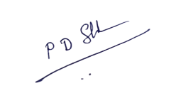

From the President's Desk....
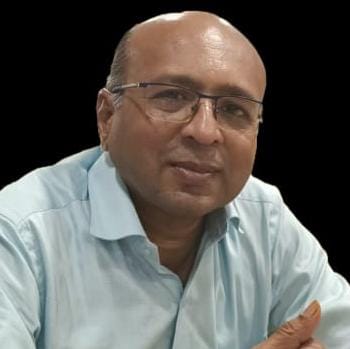
Dr. Prashant Shah
Hon. PRESIDENT
Respected members,
On our 61st Annual Day, as I stand here, my mind goes back to the year 1999, when I joined Psychiatry at Nair Hospital and also became a life member of our society. I never imagined that one day I would be addressing this society as its President.
For me, Mumbai is truly a city of dreams a journey from a one-room kitchen in a typical Mumbai chawl to standing here at this podium today.
What I have earned today is much more valuable than money. To earn the respect and trust of your colleagues, who choose you to lead the society, is indeed a privilege.
I bow with gratitude to my mentors at Nair Hospital and Rajawadi Hospital. I am thankful to my colleagues in private practice and to the faculty of the Department of Psychiatry at Nair Hospital, where I am part of the Autism Dynamic Intervention School.
I am also grateful to my patients, from whom I have learnt so much. But this year, I want to address a subject that is close to all of us, yet often remains unspoken Burnout among doctors. We work tirelessly for the well-being of our patients. But who cares for our own health the health of doctors, nurses, and other paramedical staff?
Our tradition in Maharashtra has beautifully defined a healer through the words of Sant Tukaram Maharaj:
जे का रंजले गांजले
त्यासी म्हणे जो आपुले
तोच साधु ओळखावा
देव तेथेच जाणावा
Our patients often place us on a pedestal, and we too strive to do everything for them. We imbibe this deeply. As healthcare professionals, we are trained to recognize distress in others. We are taught to diagnose, intervene, and heal.
But who looks after us when we are distressed? Often, we remain silent. Burnout is increasingly becoming a common phenomenon. The ICD-11 has also recognized Burnout as a category. Burnout is characterized by emotional exhaustion, depersonalization, and a reduced sense of accomplishment. Increasingly, professionals from our fraternity students as well as private practitioners approach us feeling burdened. They begin to feel that all their efforts and sacrifices are not worth it.
It is at this moment that the passionate and enthusiastic doctor begins to feel detached. His empathy starts to fade.
Self-doubt sets in. There is apprehension about the system. Many feel that society does not stand by them. The revered position that our seniors once enjoyed seems to be diminishing. Monetary rewards often appear disproportionate to the risks and efforts compared to other professions.
Research suggests that the average life expectancy of doctors in India ranges between 59 and 65 years, while that of the general population is about 72 years. Why is there a gap of seven to eight years? What is happening to us?
We are all aware of the physical and psychological manifestations of Burnout. We have seen cardiovascular events in our young colleagues. We have seen suicides among physicians.
The psychological and psychiatric aspects are well known to us. Sometimes we even secretly feel relieved when our children choose not to take up medicine. Many times I hear doctor parents say that they tried their best to dissuade their children from pursuing medicine.
Why does this happen ?There are many reasons long working hours, administrative pressures, medico-legal fears, and the emotional weight of patient care. When our young colleagues begin practice, they constantly worry: Will patients come? Will they continue to come?
We then live in a continuous state of hypervigilance. The boundary between professional and personal life dissolves. Even at the dining table, we find ourselves thinking about our patients.
Why? Because of expectations the expectations we place upon ourselves. As doctors, we want to be perfect. We want to be excellent. We never want to falter. And so we suffer quietly. Whether Burnout is an individual issue or a systemic issue may be debated, but the consequences remain the same.
A Burnt out doctor is more likely to make errors. Relationships suffer. In some cases, it can even cost lives the lives of patients or the life of the doctor himself or herself. Less than a year ago, I lost a friend and colleague to sudden cardiac arrest. Was he Burnt out? I do not know.
We often hear conversations about stressful situations in the profession when we meet colleagues over lunch, dinner, or social gatherings. And what do we do?
We listen and then we forget. We return to our routine work. But when a doctor suffers, the entire healthcare system is affected.
Why are we reluctant to seek help? Perhaps the greatest barrier to addressing Burnout is stigma even within our own medical profession, and perhaps even more so among mental health professionals. We hesitate to seek help for fear of judgment. We worry about being seen as weak.
This must change. Seeking help is not weakness. In psychiatry, we call it insight the ability to recognize that something is wrong and to seek help.
Yes, sometimes we may feel that our world is crumbling and our life expectancy is shrinking. But just as our physical strength depends on our backbone, the backbone of our strength as doctors is our fraternity medical professionals from all specialties and all fields of medicine.
The legendary poet Kusumagraj captured this spirit beautifully when he wrote:
ओळखलंत का सर मला?
पावसात आला कोणी
कपडे होते कर्दमलेले
केशांवरती पाणी…
मोडून पडला संसार तरी
मोडला नाही कणा
पाठीवरती हात ठेवून
फक्त लढ म्हणा!
This is exactly what we need.
We may not be able to change the entire healthcare system overnight. But I want the Bombay Psychiatric Society to become that hand on the back of every healthcare professional.
Sometimes a doctor only needs reassurance someone who will listen. And often, that itself is enough for him or her to find the strength to fight back. We can become that backbone for our medical fraternity. And as mental health professionals, who better than us to lead this change?
My vision for this year is to move from *Burnout to Balance.*
To achieve this, I propose collaborations with organizations such as the Indian Medical Association, the Association of Medical Consultants, and other specialty bodies to normalize seeking help and to address the issue of Burnout openly.
When our younger colleagues begin their practice, they must learn not only the science of medicine but also the art of practice.
I propose lectures by senior colleagues where they can share their experiences and address these issues. The Bombay Psychiatric Society can organize sessions on establishing practice, integrating technology, smart use of time, setting boundaries, and taking breaks without guilt.
Medical practice is not a 100-meter race it is a marathon that requires endurance. And for that, we ourselves must remain healthy.
Let us commit to a year of *growth* a year that includes *self-growth* as well.